Creamy Mango Sago Recipe- Delicious Tropical Dessert
Creamy Mango Sago is more than just a dessert; it’s a taste of sunshine and pure bliss in every spoonful. If you’ve ever craved a dessert that’s both incredibly refreshing and decadently creamy, look no further. This beloved Asian delicacy has captured hearts worldwide for its delightful texture and vibrant, tropical flavor. What makes Creamy Mango Sago so special? It’s the harmonious marriage of sweet, ripe mangoes, chewy sago pearls, and a luxurious, silky coconut milk base. The natural sweetness of the mangoes, when perfectly blended with the subtle richness of coconut milk, creates an irresistible symphony of flavors that dances on your palate. It’s the ultimate treat to cool down on a warm day or to simply indulge in a moment of sweet escape.
Why You’ll Love This Creamy Mango Sago Recipe:
So easy to whip up!
This recipe is designed for ultimate enjoyment with minimal fuss. You’ll be surprised how effortlessly you can create this restaurant-worthy dessert in your own kitchen.
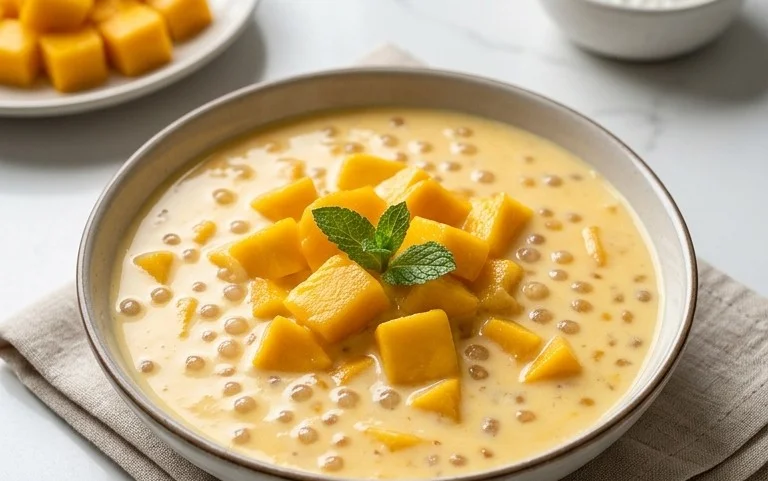
Creamy Mango Sago
There’s something truly magical about a dessert that captures the essence of a tropical paradise. Creamy Mango Sago is precisely that kind of dessert – a silky, sweet, and utterly refreshing treat that screams sunshine and good times. It’s a dessert that’s surprisingly simple to make, yet it delivers an explosion of flavors and textures that will leave you wanting more. The star of this show, of course, is the luscious mango. When perfectly ripe, its sweetness is unparalleled, and its vibrant color is a feast for the eyes. Paired with the chewy pearls of sago and the rich, creamy base, it’s a combination that’s hard to beat. This dessert is perfect for a hot afternoon, a celebratory gathering, or simply whenever you need a little taste of the tropics. Let’s dive into how we can create this delightful dessert together.
Ingredients:
Preparing the Sago Pearls
The first step in creating our delightful Creamy Mango Sago is to prepare the sago pearls. These tiny translucent spheres will provide a wonderful chewy texture to our dessert. It’s important to rinse the uncooked sago pearls under cold running water to remove any excess starch. This step helps prevent them from clumping together too much as they cook. Once rinsed, bring a pot of water to a rolling boil – you’ll need enough water so the sago pearls have plenty of room to swim around, about 4-6 cups should suffice. Carefully add the rinsed sago pearls to the boiling water. Stir them gently as soon as you add them to prevent sticking to the bottom of the pot. Now, let them cook. The sago pearls are ready when they become translucent, with just a tiny white dot remaining in the center. This usually takes about 15-20 minutes. Keep an eye on them and stir occasionally. Once they reach the desired translucency, immediately drain the sago pearls in a colander and rinse them thoroughly with cold water. This rinsing step is crucial as it stops the cooking process and washes away any remaining starch, preventing them from becoming gummy. Set the rinsed sago aside.
Preparing the Mangoes
While the sago is cooking and cooling, let’s get our star ingredient ready: the mangoes. For this recipe, we’re using ripe beef cbeef hampagne (yellow) mangoes, which are known for their incredibly sweet flavor and smooth, non-fibrous texture. To prepare them, you’ll want to wash them thoroughly. Then, carefully slice off the flesh from around the large, flat pit in the center. You can do this by cutting down along the sides of the pit. Score the mango flesh into a grid pattern without cutting through the skin. Then, gently push the skin from the underside to pop the cubes of mango flesh outward, making them easy to slice off. Alternatively, you can peel the mangoes and then dice the flesh. We’ll be using about two-thirds of the mango flesh for blending into the creamy base, and the remaining one-third will be diced and reserved for garnishing and adding textural contrast. For the blended portion, place the mango cubes into a blender.
Creating the Creamy Mango Base
Now, it’s time to bring everything together to create that luscious, creamy mango base. Into the blender with the two-thirds of mango flesh we’ve prepared, add the sweetened condensed milk. This will provide a lovely sweetness and richness. If you prefer a less sweet dessert, you can start with a little less condensed milk and add more to taste later. Next, pour in the evaporated milk. This milk adds a wonderful creaminess without making the base too heavy. Finally, add the full-fat coconut milk. The coconut milk is key to achieving that authentic tropical flavor and a wonderfully smooth, rich texture. It should be unsweetened so we can control the overall sweetness of the dessert. Blend all these ingredients together until you have a smooth, uniform, and vibrant yellow purée. Taste the mixture at this point and adjust the sweetness if necessary by adding a little more condensed milk or a touch of sugar.
Assembling the Dessert
Once all our components are ready – the cooked and cooled sago pearls, and the smooth, creamy mango base – it’s time for the exciting part: assembly! In a large serving bowl or individual dessert cups, begin extract by adding a layer of the cooked sago pearls. You can add as much or as little as you like, depending on how much chew you want in each bite. Then, generously pour the creamy mango mixture over the sago pearls. Ensure that the sago is well submerged in the mango liquid to allow the flavors to meld beautifully. If you are using individual cups, divide the sago pearls evenly among them before pouring in the mango mixture. This ensures each serving has a good balance of sago and cream.
Chilling and Serving
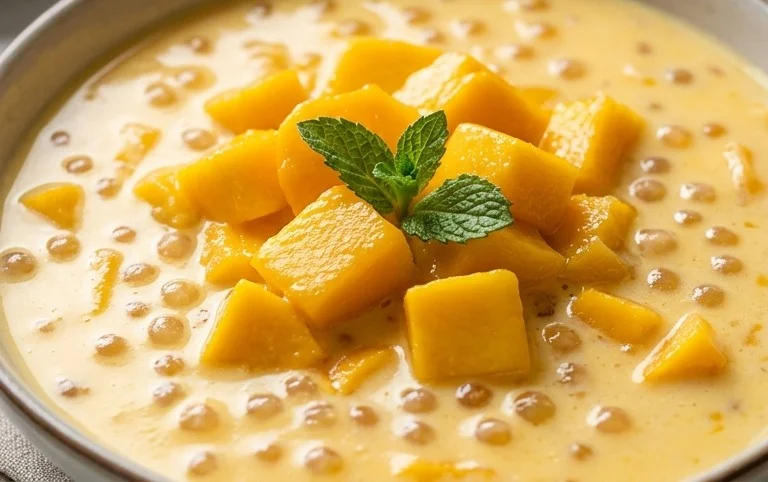
For the ultimate Creamy Mango Sago experience, chilling is essential. The flavors meld and deepen as the dessert chills, and the creamy base will thicken slightly. Cover the serving bowl or individual cups with plastic wrap and refrigerate for at least 2-3 hours, or ideally until thoroughly chilled. This allows the sago pearls to absorb some of the mango mixture and become even more delightfully chewy. Just before serving, take your chilled Creamy Mango Sago out of the refrigerator. Take the reserved diced mango and sprinkle it generously over the top of each serving. This adds a fresh burst of mango flavor and a beautiful visual appeal. You can also add a sprig of mint for a touch of color and freshness, or a drizzle of extra coconut milk for an even richer finish. Serve immediately and enjoy the taste of pure tropical bliss!
Conclusion:
There you have it – your guide to creating a delightful Creamy Mango Sago! This dessert is a true celebration of tropical flavors, offering a perfect balance of sweet, creamy, and refreshing notes that make it incredibly satisfying. The luscious mango puree combined with the chewy sago pearls and rich coconut milk creates a textural masterpiece that’s both elegant and simple to make. I truly hope you’ll give this Creamy Mango Sago recipe a try; it’s become a personal favorite in my kitchen, and I’m confident it will become one of yours too.
For serving, this dessert shines when chilled. Enjoy it as a light after-dinner treat, a sophisticated dessert for gatherings, or even a delightful afternoon pick-me-up. Feel free to get creative with variations! You could add a drizzle of condensed milk for extra sweetness, a sprinkle of toasted coconut flakes for added crunch, or even a few fresh mint leaves for a burst of freshness. Don’t be afraid to experiment and make this recipe your own!
Frequently Asked Questions:
Q: Can I use frozen mango if fresh mangoes are not in season?
A: Absolutely! Frozen mangoes are a fantastic substitute. Thaw them completely before pureeing. You might find the texture slightly different, but the flavor will still be wonderfully mango-centric. Just ensure you drain any excess water after thawing.
Q: What if I don’t have coconut milk? Can I use something else?
A: While coconut milk is key to the authentic flavor and creaminess, you can experiment with other dairy or non-dairy milks like evaporated milk, condensed milk (for a sweeter base), or even almond milk or oat milk. However, keep in mind that these alternatives will alter the flavor profile and richness of your Creamy Mango Sago.
Creamy Mango Sago
A delightful and refreshing dessert featuring sweet mangoes, creamy milk, and chewy sago pearls. Perfect for a tropical treat.
Ingredients
-
3 ripe champagne (yellow) mangoes
-
1/4 cup uncooked small tapioca or sago pearls
-
1/4 cup sweetened condensed milk
-
3/4 cup evaporated milk
-
3/4 cup full fat coconut milk (unsweetened)
Instructions
-
Step 1
Cook the sago pearls according to package directions. Typically, this involves boiling them in water until translucent, then rinsing with cold water. -
Step 2
While the sago is cooking, peel and dice 2 of the mangoes. Puree the third mango in a blender until smooth. -
Step 3
In a large bowl, combine the pureed mango, sweetened condensed milk, evaporated milk, and coconut milk. -
Step 4
Gently stir in the cooked and rinsed sago pearls and the diced mangoes. -
Step 5
Chill the dessert in the refrigerator for at least 30 minutes to allow the flavors to meld and the mixture to thicken. -
Step 6
Serve cold. Garnish with additional diced mango if desired.
Important Information
Nutrition Facts (Per Serving)
It is important to consider this information as approximate and not to use it as definitive health advice.
Allergy Information
Please check ingredients for potential allergens and consult a health professional if in doubt.